One of our most important daily tasks is to make sure we stay hydrated and have enough water. That can be tricky in the hot, dry desert, especially because there is a major drought in California. So how do we get water on the trail and know how much to carry?
A trail volunteer maintains a water report (pctwater.com), which lists all of the potential water sources on the trail. Hikers can submit updates on whether these have water or not and it is updated daily. We also use the Guthooks PCT map app on our phones, which also shows the water sources and users can leave similar comments about the status of the sources.
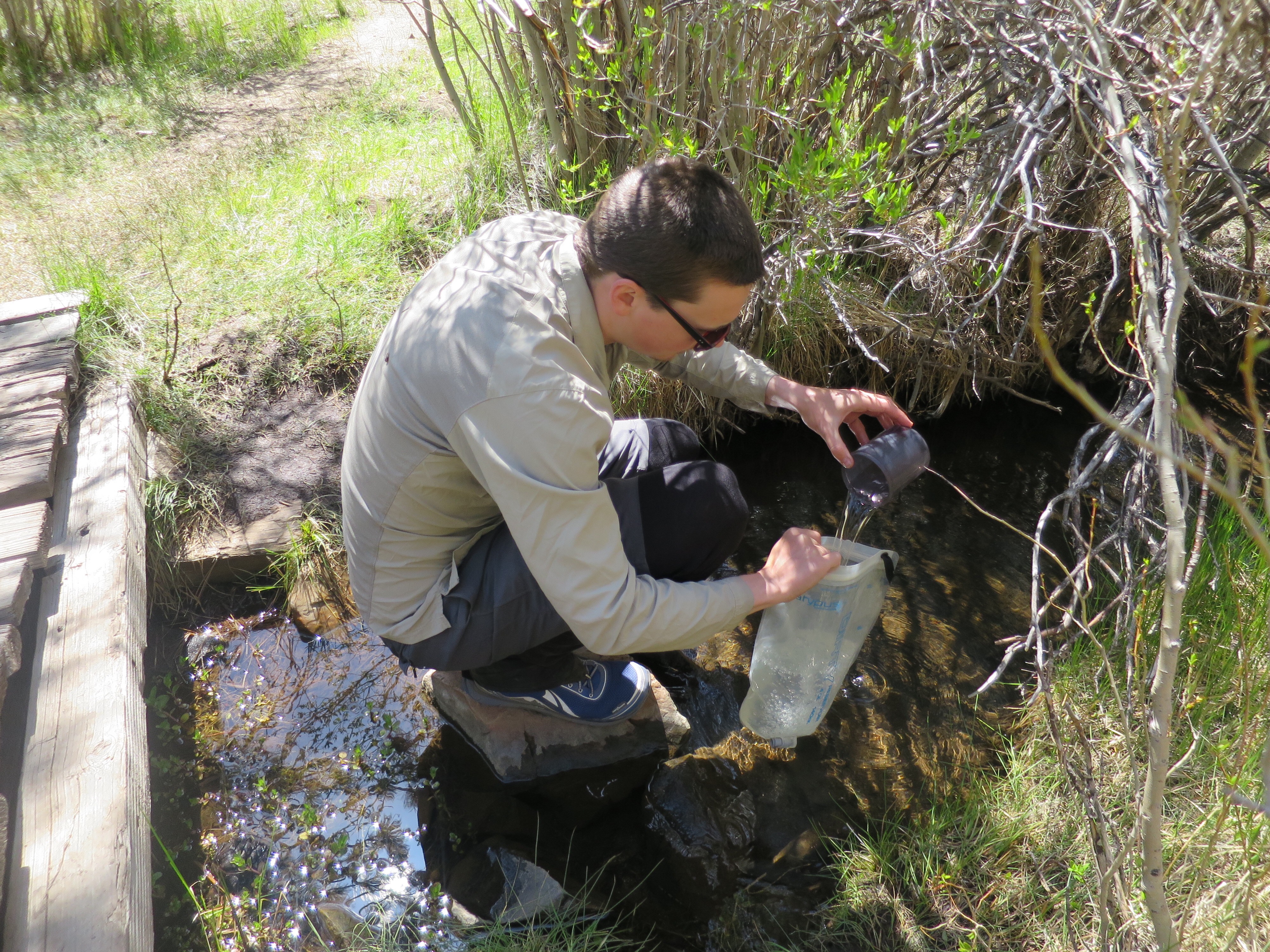
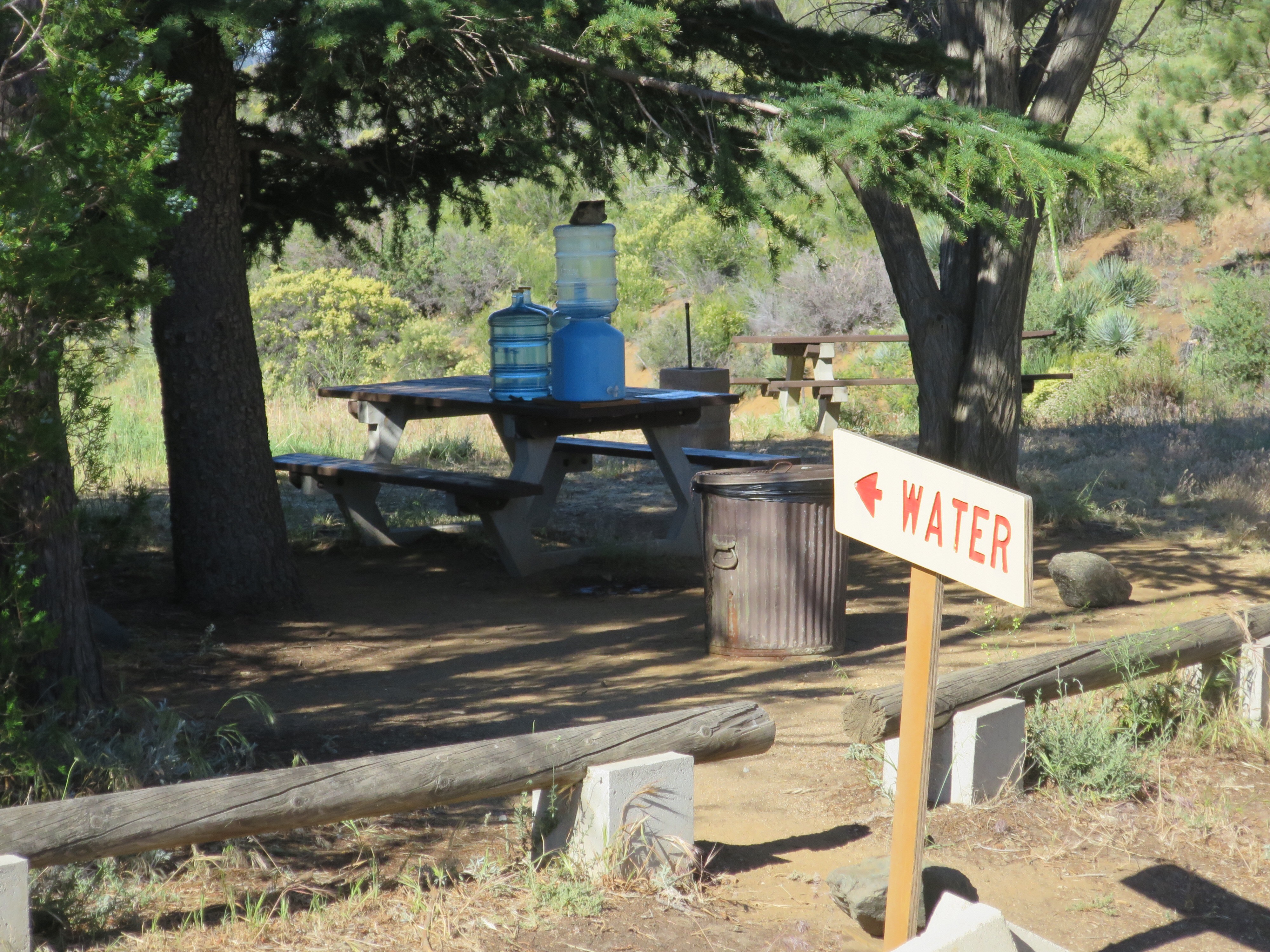
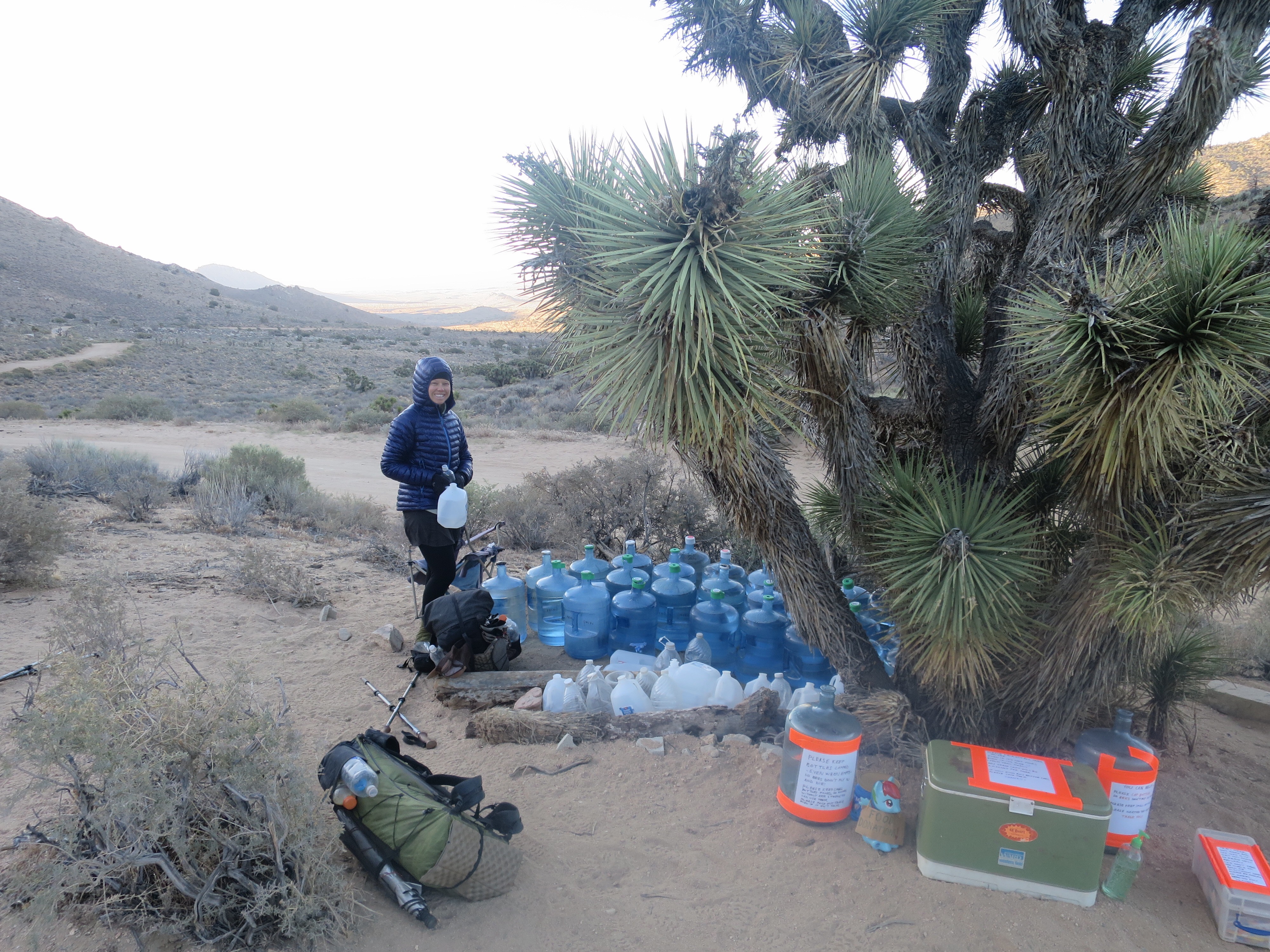
There are lots of possible water sources: springs, creeks, raging rivers, guzzlers (a rain catchment system), campground spigots, even the bathroom sink at a McDonalds (as we had to use at Cajon Pass). Sometimes there are also water caches, where trail angels put out jugs of water for hikers. These are hard to maintain, especially with the increasing amount of hikers in the past few years, so they aren’t listed in the water report and you shouldn’t rely on caches.
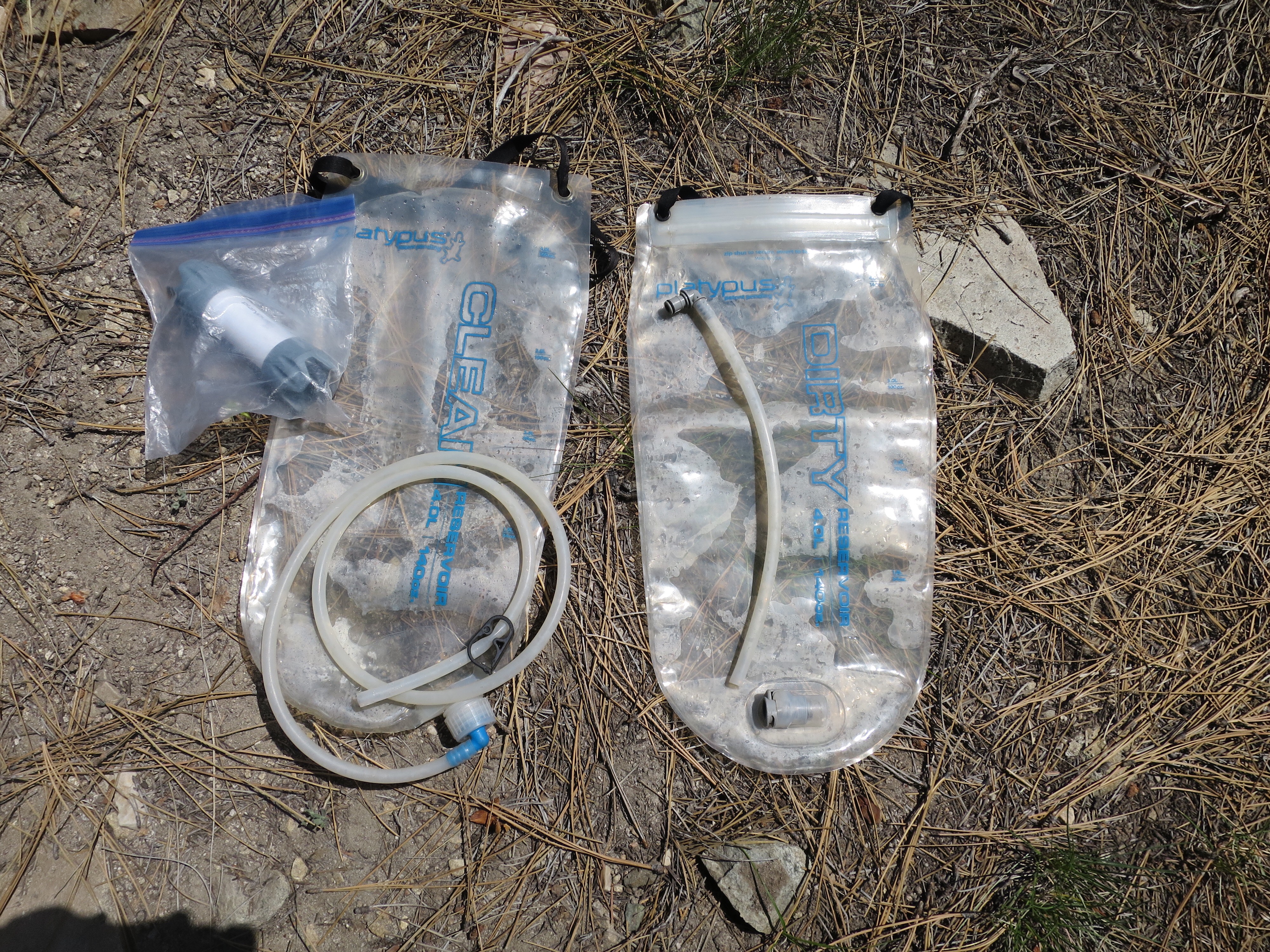
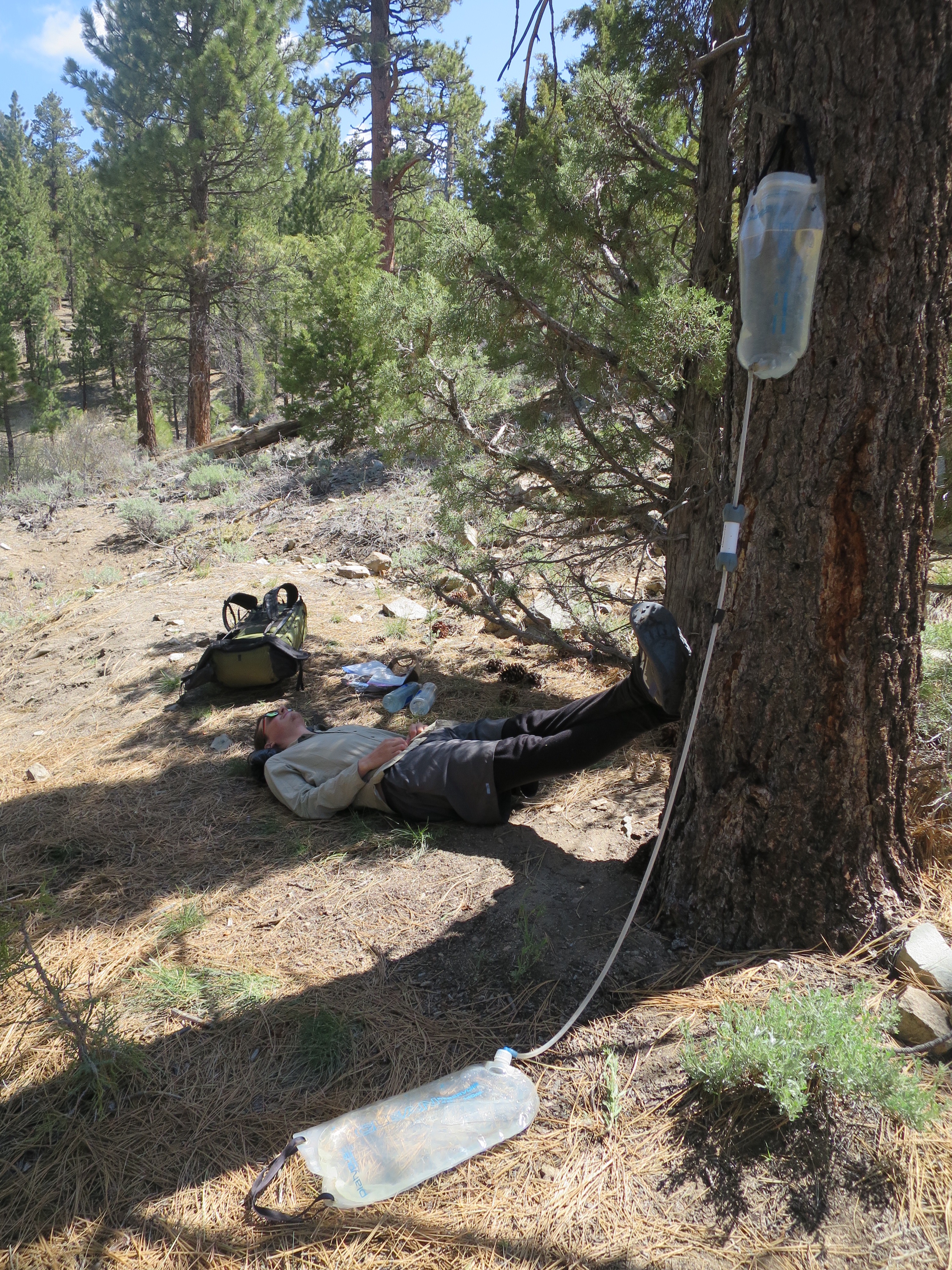
It is also important to treat/disinfect our water (for nasty things like giardia) unless it is clearly marked potable water. For water treatment, Pat and I use a Platypus gravity filter, which we love. It is really easy and requires minimal work. One of the most popular water filters on the trail is called a Sawyer squeeze, which has a similar membrane filter to the gravity filter, but you have to squeeze the water through it. Other types of common treatment are bleach (chlorine), aquamira drops (chlorine dioxide), and I’ve even seen a few steripens (battery operated UV light).
Many of the once reliable sources are now dry (due to the drought) or become dry in the late spring. As a result there are many sections where we need to carry water for 20+ miles. There was even a 42-mile waterless stretch recently.
A good estimate for how much we should carry is 1 liter for every 4 miles. If we are hiking in the early morning or evening we can get by with less, and if we are dry-camping (not camped at a water source), we need a bit more for dinner and breakfast.
We just finished the 700 mile desert section of the PCT and are excited to enter the Sierra Nevada Mountains. Besides the amazing mountains and views, this section will have a lot more water than the desert, which means we can carry much less water (=lighter packs). We will have to carry bear canisters, but they only weigh 2.5 lbs, or just over a liter of water for comparison.
An excellent water summary – do you know much about water treatment? : )
Haha…;)